Schaerbeek is one of the most contrasting municipalities in Brussels: between the lower part, dense and popular, close to the Gare du Nord, and the upper part, more residential and leafy, the atmosphere and prices vary significantly from one street to the next. This is precisely what makes it an interesting area for anyone watching market dynamics. Several sectors are currently attracting attention and public investment, thanks to major urban projects and neighbourhood renovation programmes.
Before going into detail, a word of caution. Identifying a neighbourhood in transformation never guarantees future capital gains. Major urban projects experience delays, appeals and revisions, sometimes for years. The purpose of this article is therefore factual: which sectors are benefiting from concrete investment, and which parameters to watch, without predicting any return. For context, the median Schaerbeek apartment stands at 255,000 euros according to Statbel 2024 data, approximately 4 per cent below the regional median of 265,000 euros (Federation of Notaries, 2025).
The lower part of Schaerbeek and the Brabant quarter
This is historically the most popular and densely populated sector of the municipality, around Rue de Brabant, Place Liedts and Rue Royale Sainte-Marie, just steps from the Gare du Nord. Long undervalued, this lower Schaerbeek has been undergoing a renewal dynamic for several years, driven both by some of the most affordable entry prices in the municipality and by public investment.
The most concrete lever is the Petite Colline sustainable neighbourhood contract, the thirteenth for the municipality, launched in 2020 and running until 2026. Approved by the Brussels Region in July 2021, it targets the area between Rue Royale Sainte-Marie and Rue de Brabant, with interventions on housing, public spaces and community facilities, in consultation with residents. This type of programme durably improves the living environment and acts as a catalyst for neighbourhood attractiveness.
The sector remains highly sought after by first-time buyers and investors for its reasonable entry price and centrality. The downside, typical of this type of neighbourhood, is the heterogeneity of the building stock and the significant proportion of properties requiring renovation, hence particular attention to energy performance.
Around the Josaphat wasteland
To the east of the municipality, on the border with Evere, the former Josaphat marshalling yard is one of the largest urban projects in the Region. This approximately 24-hectare site, acquired by the Urban Development Corporation (SAU) in 2006, is one of the last regional land reserves. After several revisions, the new sustainable neighbourhood project now provides for 509 dwellings with a stated mix (private, social rental, social acquisition and middle-class housing), accompanied by a school, a nursery, shops and community premises. According to the SAU, a significant portion of the site, around 40 per cent, would be preserved for biodiversity, a point that has generated strong citizen mobilisation and political debate.
The project has not yet been finalised in its definitive version. A public inquiry was held in summer 2025, the municipality’s opinion had not yet been settled, and the final decision rests with the Region. The implementation timeline therefore remains uncertain. For neighbouring residential areas, such as Terdelt, the eventual creation of a new neighbourhood with a park, a school and shops could strengthen the sector’s attractiveness, but this is a medium to long-term horizon, to be monitored project by project.
Reyers and Diamant: the Mediapark project
Still to the east, the Reyers site, current headquarters of RTBF and VRT, is the subject of a major transformation project called Mediapark. The programme provides for a new mixed neighbourhood combining a media hub (approximately 20,000 square metres of activities), nearly 1,400 dwellings including a public share, local shops and community facilities. The most striking element is the creation of a public park of approximately 10 hectares, of which 2 hectares are reserved for biodiversity, presented as a first for a Brussels urban project.
This project, whose first construction phases have begun, is part of a transformation planned over approximately fifteen years. For the surroundings, around Boulevard Reyers and Diamant station, it could durably reshape this eastern edge of Schaerbeek, on the border with Evere. Diamant metro station has also undergone renovation, with an investment of approximately 4.1 million euros and works begun in early 2025 to modernise its facilities.
The Colignon quarter and the heritage heart
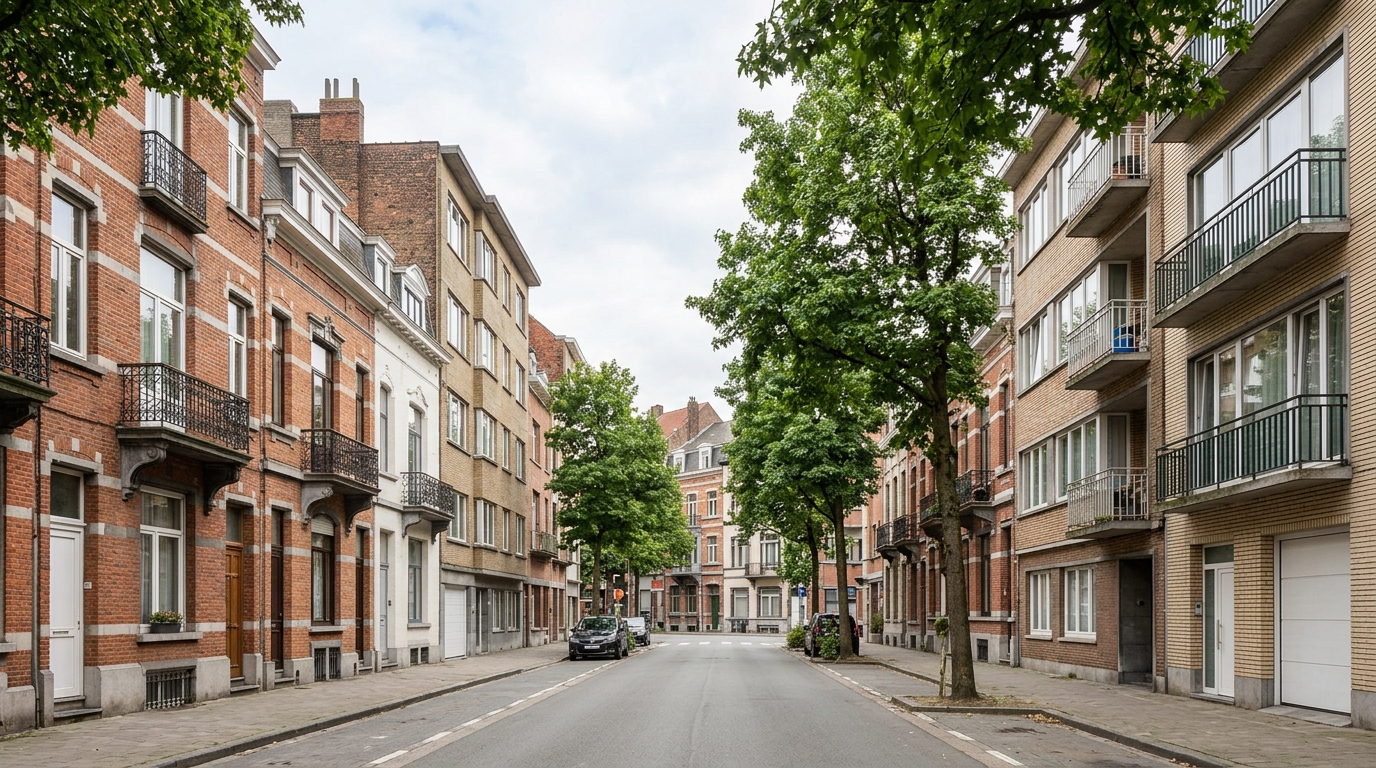
Around Place Colignon and the town hall, Schaerbeek possesses one of the most remarkable heritage ensembles in Brussels. The listed town hall and the character buildings surrounding it give the sector a strong architectural identity, sought after by lovers of period properties. This historic quarter benefits from continuous appreciation, driven by the quality of the building stock and proximity to shopping streets.
This is also one of the sectors that would have been directly served by the future Liedts and Colignon metro stations. This point requires an important clarification, developed below.
Helmet, already on the move
In the north of the municipality, the Helmet neighbourhood continues its rise in attractiveness, driven by its neighbourhood life, proximity to Josaphat Park and still accessible prices. We dedicate a comprehensive guide to it separately, to be consulted for details on its atmosphere, transport and property market.
The mobility update: metro 3 frozen
Many articles still present the future metro 3 as the great driver of neighbourhoods in the north and east of Schaerbeek. This information is no longer current, and it is an essential point for anyone wanting to reason accurately.
Following the Brussels government agreement of 12 February 2026, phase 2 of metro 3, i.e. the extension between the Gare du Nord and Bordet, was suspended for a period of approximately ten years. This phase provided for seven new stations, most of which are located in Schaerbeek (Liedts, Colignon, Verboekhoven, Riga, Tilleul, Paix and Bordet). The decision follows a significant cost and schedule overrun highlighted by the Court of Auditors. The section would ultimately be replaced by a tram complementing the existing network, whose route, schedule and budget are not yet known. Phase 1, between the Gare du Nord and Albert, continues.
In practical terms, this means you should not buy today betting on the imminent arrival of a metro station in these neighbourhoods. The future service remains to be defined. This is precisely the kind of parameter that reminds us that an announced project is not a completed project, and that it is better to base a decision on what exists rather than on promises whose timeline can shift.
The residential hubs that anchor the municipality
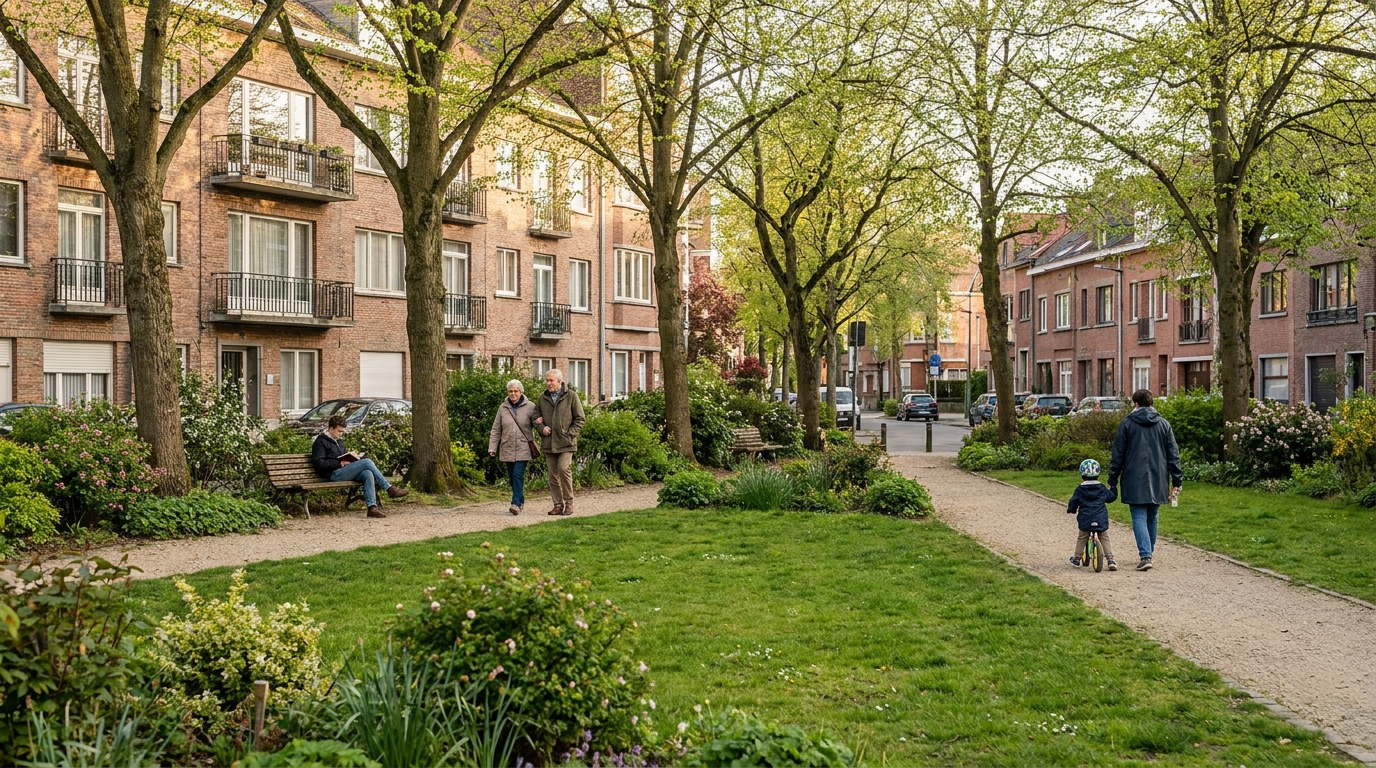
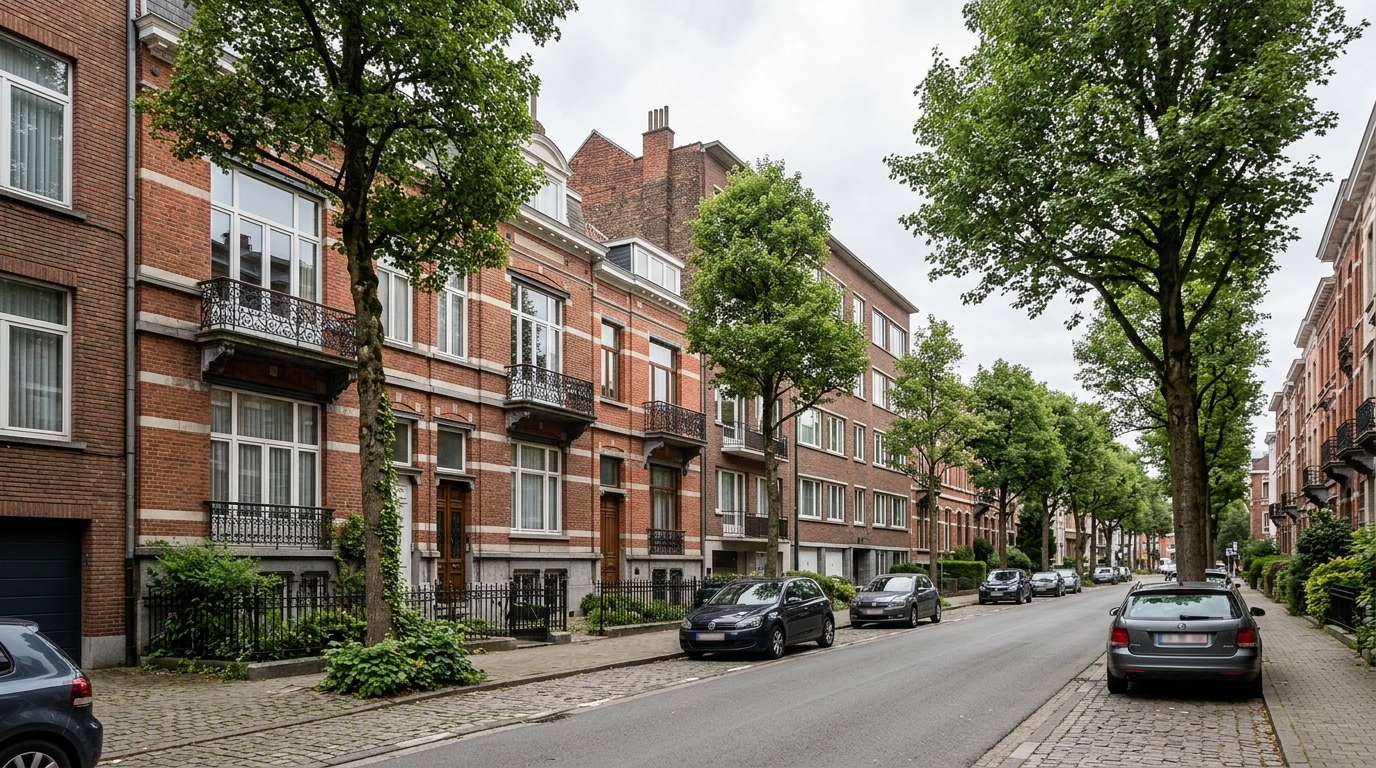
Alongside the sectors in transformation, Schaerbeek has well-established residential neighbourhoods that pull values upward and give the municipality its reputation. The Quartier des Fleurs, the Dailly sector and the surroundings of Square Eugene Plasky are among the most sought-after addresses, appreciated for their calm, their period houses and their leafy setting. These neighbourhoods are not bets on the future; they are safe values, useful as benchmarks for gauging the potential of neighbouring sectors on the move.
What this means if you are buying or selling
If you are buying, the interest of a neighbourhood in transformation is to target a still reasonable entry price in a sector whose living environment is improving. But caution remains: base your decision on concrete, already-engaged elements (an ongoing neighbourhood contract, a construction site actually launched) rather than on announced projects with an uncertain timeline. And do not forget that, in these sectors, a significant share of the building stock requires energy renovation, to be factored into your budget.
If you are selling in one of these neighbourhoods, the renewal dynamic can be an argument, provided you remain factual and measured in your presentation. A valuation based on real, recent transactions in your street remains the best way to position your property at the right price, without overvaluing on the basis of a future project.
Do you own a property in Schaerbeek and wonder what it is worth today, in its precise neighbourhood? Request your free valuation; an agent who knows the municipality will contact you within 48 hours.
This article offers a factual reading of current projects at the date of writing. It does not constitute investment advice and does not prejudge future price developments. The urban projects cited may still evolve in their content and timeline.
Frequently asked questions
Which neighbourhoods are developing in Schaerbeek?
Several sectors are currently concentrating public investment: the lower part of the municipality and the Brabant quarter (via the Petite Colline sustainable neighbourhood contract), the surroundings of the Josaphat wasteland (future sustainable neighbourhood of 509 dwellings), and the Reyers site with the Mediapark project (nearly 1,400 dwellings and a 10-hectare public park).
Will metro 3 serve Schaerbeek?
Not in the near future. Following the regional agreement of February 2026, the extension to Bordet (phase 2), which provided for seven stations including several in Schaerbeek, was suspended for around ten years and would be replaced by a tram whose terms are not yet defined.
Should you buy in an up-and-coming neighbourhood to make a capital gain?
Identifying a neighbourhood in transformation guarantees no capital gain. Urban projects can be delayed or revised. It is better to base your decision on already-engaged elements and on a rigorous valuation than on announced projects.
How much does a property cost in Schaerbeek?
The median apartment stands at 255,000 euros according to Statbel 2024 data, below the regional median of 265,000 euros (Federation of Notaries, 2025). Prices vary significantly by neighbourhood, from the more affordable lower part to established residential sectors such as the Quartier des Fleurs.
Categories