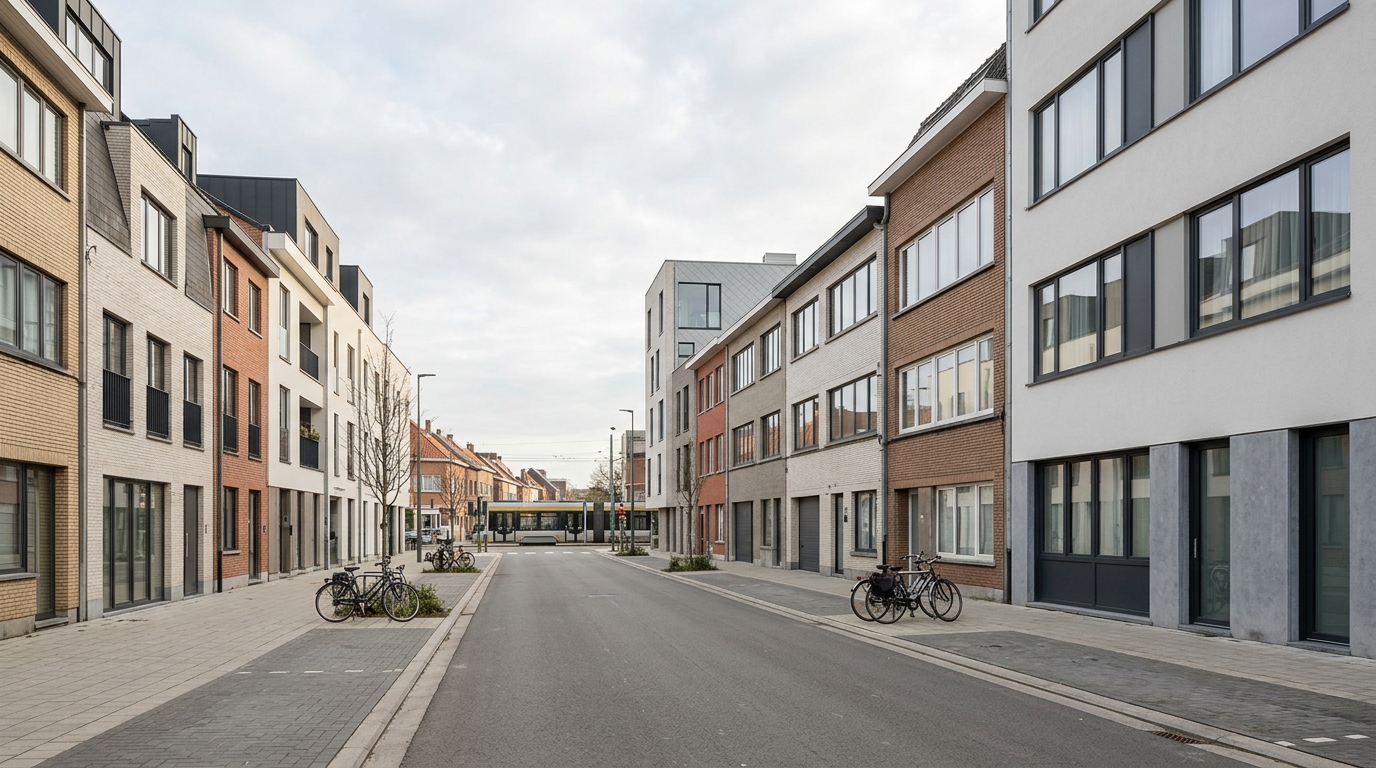
If Woluwe-Saint-Lambert had a centre of gravity, this would be it. Around Roodebeek metro station you find Belgium’s first shopping centre, the Wolubilis cultural hub, the town hall close by and the green Woluwe valley. The Roodebeek, Saint-Lambert neighbourhood combines what Brussels buyers look for most in 2026: a direct connection to the city centre, shops and services within walking distance, and a calm residential setting just two streets away from the main roads.
In this neighbourhood focus, we review the area’s history, its living environment, current prices, ongoing urban projects and the profile of properties sold here, to help you place your buying or selling project.
A neighbourhood born around a village, transformed by the metro and shopping
The Roodebeek and Place Saint-Lambert sector corresponds to one of the municipality’s historic village cores, in the Woluwe valley. Residential development mainly took place during the interwar period, with the layout of the main avenues and, a little further west, the creation of the Kapelleveld garden city, still today one of the most sought after ensembles in the municipality.
Two events then changed everything. In 1968, the Woluwe Shopping Center, now renamed The W Shopping, opened its doors: it was Brussels’ very first shopping centre, with 74 shops at the time. Extended and renovated several times since, it now totals more than 50,000 m² of retail space and remains one of the main shopping destinations in eastern Brussels. Then the arrival of metro line 1 and Roodebeek station permanently anchored the neighbourhood in the city: the city centre is reachable in around fifteen minutes, without a car.
More recently, the opening of the Wolubilis cultural hub, with its theatre, workshops and Cours Paul-Henri Spaak, added a cultural dimension that the neighbourhood was missing and created a genuine gathering place between the shopping centre and the town hall.
The living environment: the city on foot, the valley next door
This is the equation that sums up Roodebeek. On one side, a concentration of services rare in Brussels: the metro, several bus lines on Boulevard de la Woluwe, the shopping centre and its shops, the shops of Avenue Georges Henri a few minutes away, the Saint-Luc university hospital and the UCLouvain campus to the north of the municipality, and numerous schools.
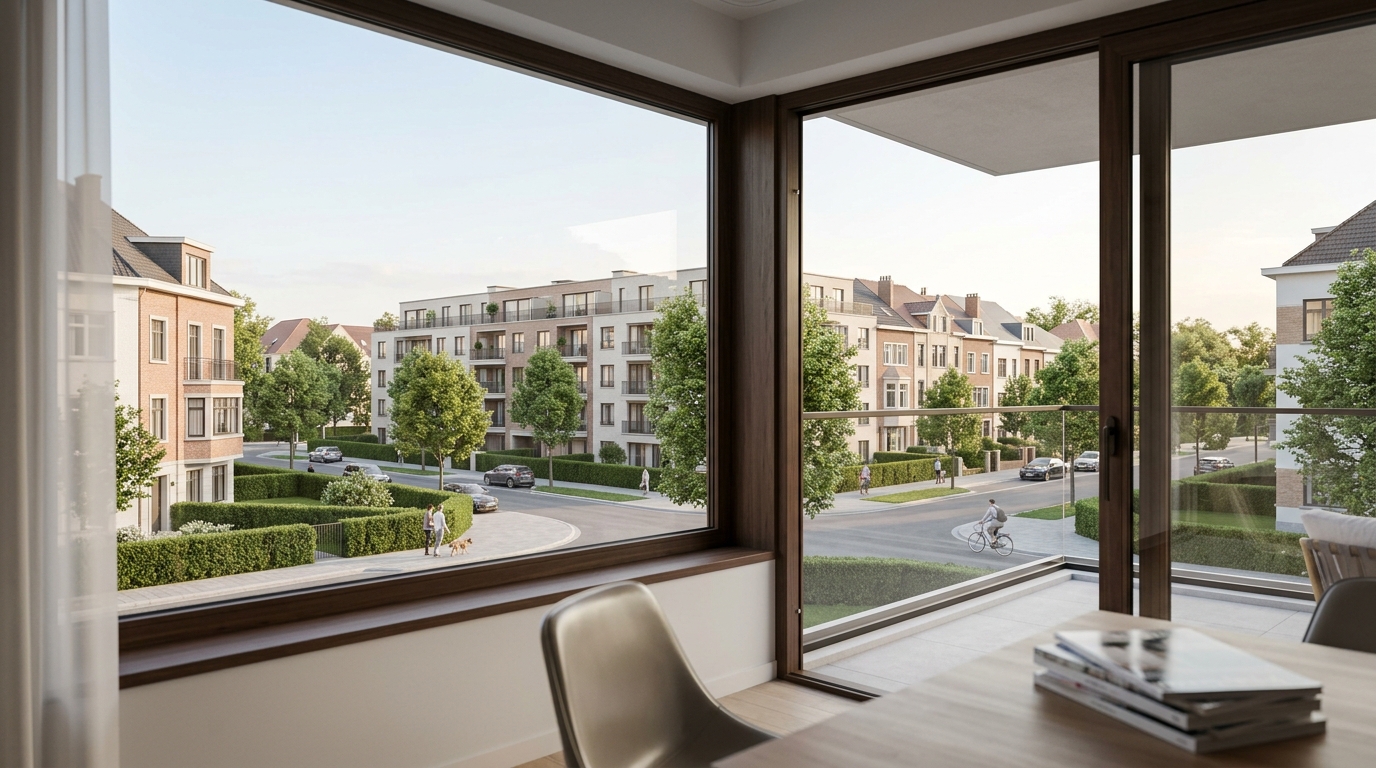
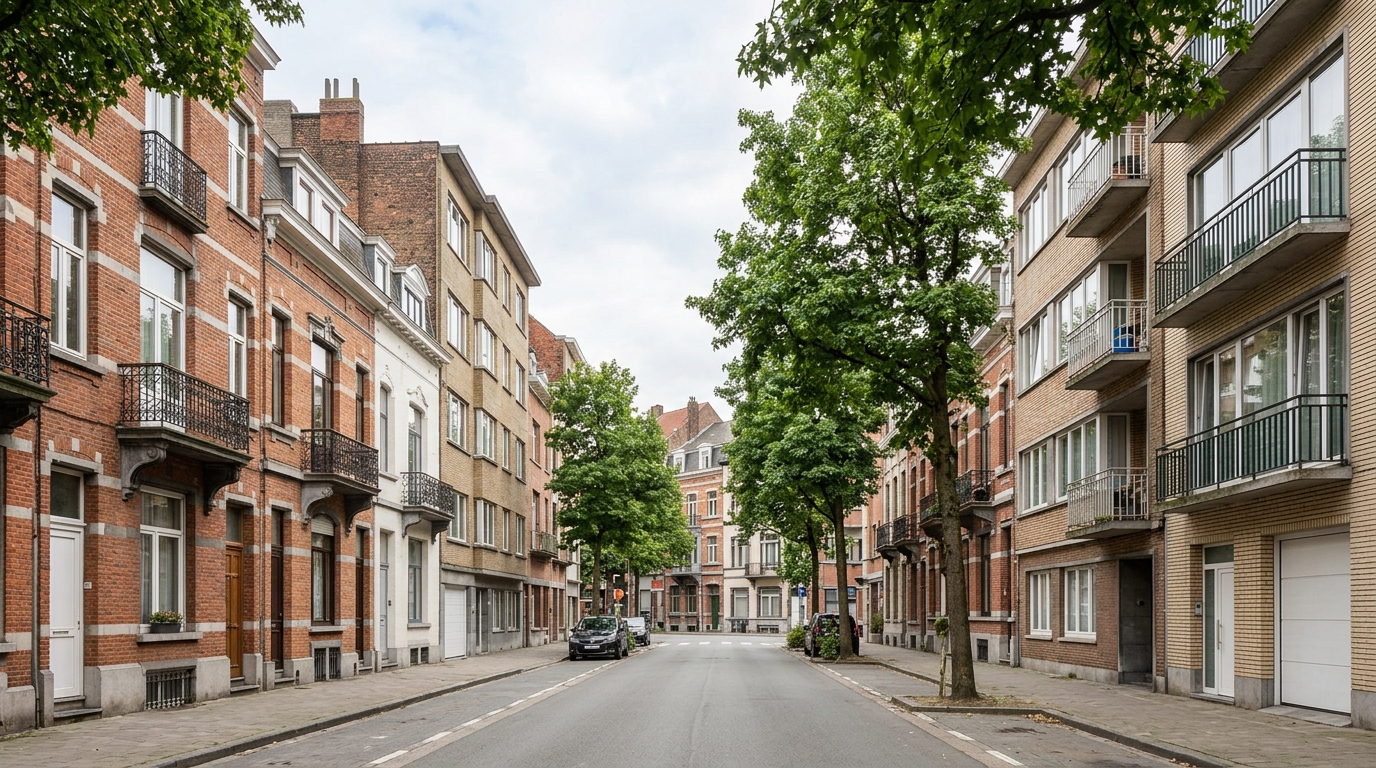
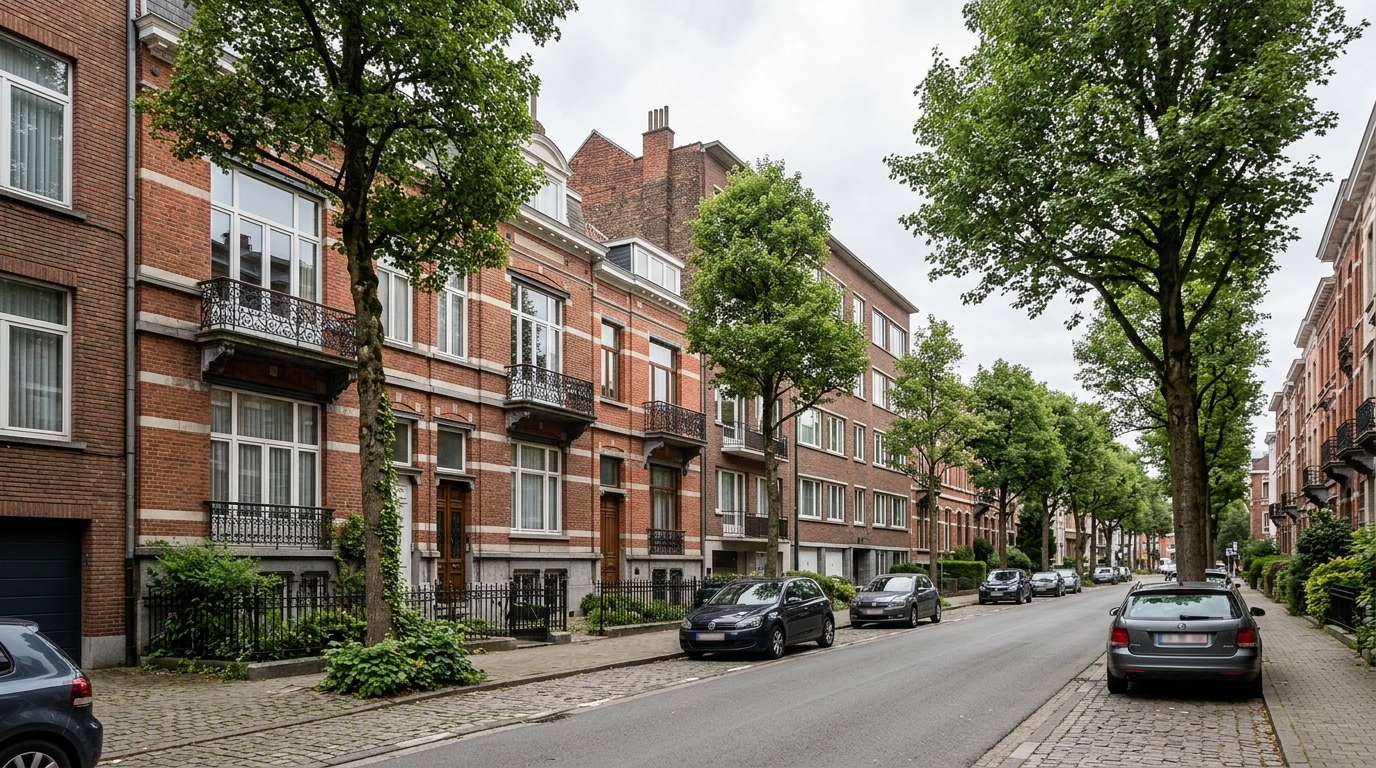
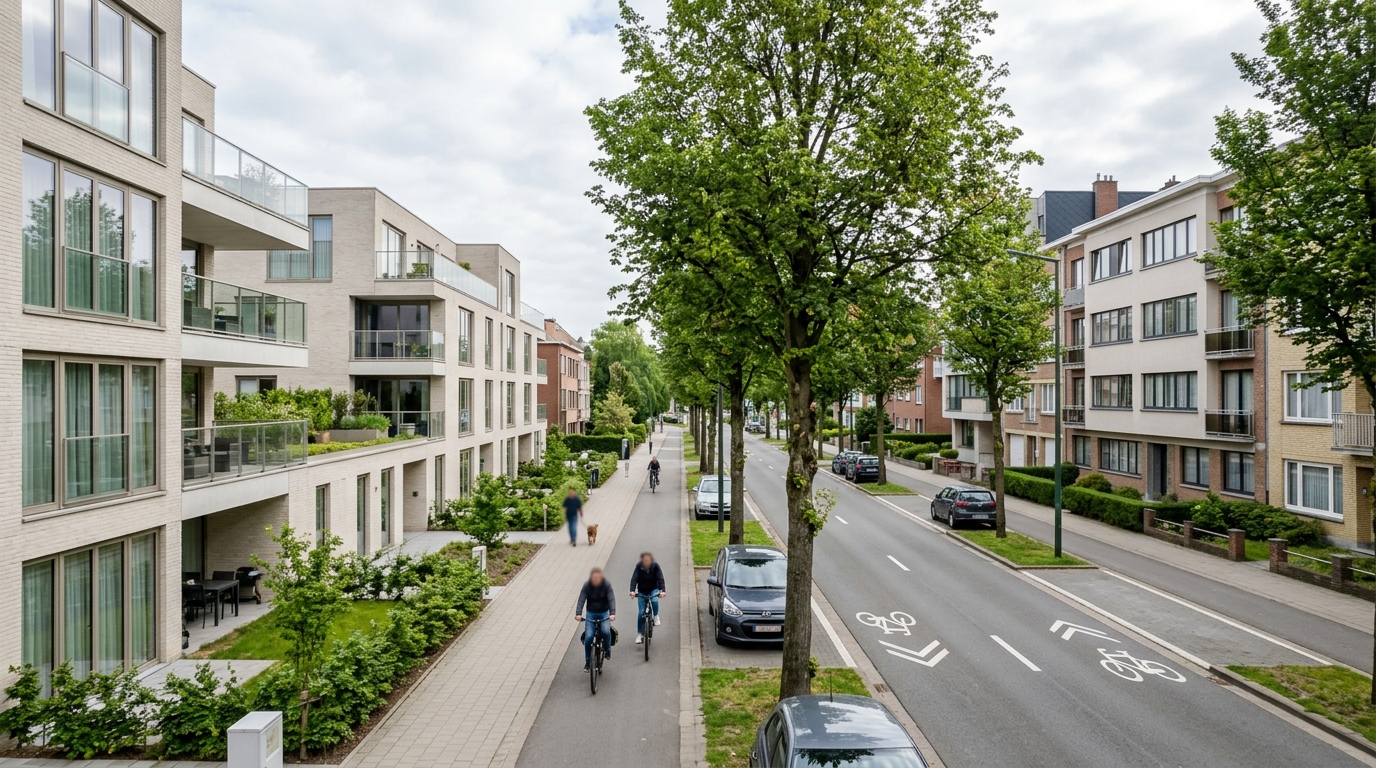
On the other side, an immediate green environment: Roodebeek park and its castle, Malou park and the ponds of the Woluwe valley, the walks that link the municipality’s green spaces. This green network gives the neighbourhood a strongly residential character as soon as you leave the main roads: quiet streets, houses with gardens, small rental buildings and co-ownerships from the 1960s to the 1990s.
The municipality has in fact chosen this sector to launch its Saint-Lambert eco-neighbourhood project, a participatory process covering the area around Place Saint-Lambert (between Cours Paul-Henri Spaak, Chaussee de Roodebeek, Rue Vervloesem and Boulevard de la Woluwe). The stated objective is twofold: to green and calm the municipality’s historic heart, and to protect it from overly intense urban development. For an owner in the neighbourhood, this is an important signal: municipal policy aims at preserving the residential character rather than densification.
Prices: a neighbourhood at the heart of one of the most expensive municipalities in Brussels
Woluwe-Saint-Lambert ranks among the most highly valued municipalities in Brussels. According to the Federation of Notaries’ 2025 review, published in early 2026, the median house price in the municipality reaches 680,000 euros, placing Woluwe-Saint-Lambert third in Brussels, behind Woluwe-Saint-Pierre and Ixelles. For apartments, the municipal median stands at 335,000 euros, also on the regional podium, in a Brussels market where apartment prices rose by 3.3% over the year.
These municipal medians cover different realities depending on the neighbourhood’s micro sectors. The immediate surroundings of the shopping centre and Boulevard de la Woluwe concentrate apartments in buildings from the 1960s to the 1980s, often spacious, whose value depends heavily on the condition of the co-ownership and the EPB certificate. The residential streets towards Roodebeek park, Kapelleveld and Place Saint-Lambert line up characterful houses and family properties that trade above the municipal median when in good condition. Direct proximity to the metro represents, for equal surface area, a constant value premium: it is one of the criteria most often cited by the buyers we work with.
A point of caution for sellers: the 2025-2026 Brussels market marks a halt for old, energy intensive properties, with buyers now factoring the cost of energy compliance works into their offers. In Roodebeek as elsewhere, the price gap between a renovated property and one needing renovation has widened.
The projects shaping tomorrow’s neighbourhood
Three planning files deserve the attention of any owner or prospective buyer in the sector.
The shopping centre extension, refused. The shopping centre’s owner, Eurocommercial, had submitted an extension project of around 12,000 m² of retail space topped by around a hundred homes, at the corner of Rue Saint-Lambert and Cours Paul-Henri Spaak. The municipality issued an unfavourable opinion, judging the scale disproportionate for the neighbourhood, and the project was refused at regional level. The current status quo preserves the sector’s balance, even if redevelopment of the shopping centre’s surroundings remains a recurring topic.
Densification pressure at the edges. A few metres from the metro, the Rue Neerveld project, which planned to replace 17 single family houses with a complex of around 190 apartments, triggered strong mobilisation during its public inquiry. Whatever its final outcome, this file illustrates the sector’s appeal to developers: proximity to Roodebeek metro station has become a densification argument, which the municipality is trying to manage.
The Saint-Lambert eco-neighbourhood. The participatory process resulted in 27 priority projects around three themes (the valley as a resource, gardens in transition, green and blue pathways). Concretely: greening, traffic calming, and enhancement of pedestrian links between Place Saint-Lambert, the valley and the parks. All elements that support the neighbourhood’s residential value over the long term.
Who is this neighbourhood for?
Families find houses with gardens within walking distance of schools, parks and the metro. Older buyers appreciate spacious apartments with a lift near the shopping centre, allowing everything to be done on foot. Investors target the solid rental demand fuelled by the Saint-Luc hospital, the university campus and the metro connection towards the European quarter and the centre.
For sellers, the neighbourhood benefits from demand that is structurally higher than supply for properties in good condition. The key, as everywhere in Brussels in 2026, is the initial price positioning: a Roodebeek property correctly valued and well presented sells within good timeframes, while an overly ambitious starting price leads to successive reductions that weaken the negotiation.
Frequently asked questions
What is the price of property in the Roodebeek neighbourhood in Woluwe-Saint-Lambert?
According to the notaries’ 2025 review, the municipality shows a median price of 680,000 euros for a house and 335,000 euros for an apartment, placing it third among Brussels municipalities. In the Roodebeek neighbourhood, properties close to the metro and parks frequently trade above these medians when in good condition, while energy intensive properties suffer a growing discount.
Is the Roodebeek neighbourhood well served by public transport?
Yes, this is one of its major assets: Roodebeek metro station (line 1) connects to the city centre in around fifteen minutes, complemented by several bus lines on Boulevard de la Woluwe and quick access to the ring road and the E40. The shopping centre, the Wolubilis cultural hub and the shops are all within walking distance.
What urban projects are currently underway around Roodebeek?
The extension project for The W Shopping was refused, with the municipality favouring preservation of the neighbourhood’s current scale. The Place Saint-Lambert sector is the subject of a participatory eco-neighbourhood project focused on greening and traffic calming. Densification projects at the edges, such as the one on Rue Neerveld, are subject to municipal and citizen vigilance.
Do you own a property in Roodebeek or elsewhere in Woluwe-Saint-Lambert? Request your free valuation: our local experts assess your property based on recent sales in the neighbourhood, street by street.
Categories